
Have you ever seen a ruler that has two distinct numbers on it, i.e., centimetres and millimetres? These two are units of length measurement but in different scales. Centimetres are meant for large objects’ measurements, whereas millimetres are good for small objects’ measurements.
For instance, you can measure the length of your pencil in centimetres but when you need to find out the diameter of its lead, millimetres are more convenient to use.
Today, we will discuss 16 cm to mm in an easy and exciting manner. We will explore the formula of conversion, practical examples, and will also study the working of both centimetres and millimetres. Let’s make our mathematics lessons more exciting!
How many 16 cm to mm?
16 cm to mm = 160 millimetres.
Yes, the answer is 160 mm! Converting centimetres into millimetres is easy because both units belong to the metric measurement system.
Here is the quick conversion:
| Measurement | Equivalent |
| Centimetres | 16 cm |
| Millimetres | 160 mm |
| Conversion factor | 1 cm = 10 mm |
| Formula | 16 × 10 |
| Final answer | 160 mm |
This means if you have a 16 cm long pencil, its length will be 160 mm when measured using millimetres.
What Are Centimetres (cm) and Millimetres (mm)?
Let us first get to know what centimetres and millimetres really are before converting them.
Both centimeters and millimeters are measurements of length. We use them to determine how long, how wide, how tall, or how thick anything is.
What Is a Centimetre (cm)?
Centimetre is a unit of measurement for length and its abbreviation is cm.
Some of the objects that can be measured using centimetres include pencils, notebooks, toys, books, and small boxes.
For example:
- A small pencil may be around 10 cm long.
- A notebook may be around 20 cm wide.
- A ruler commonly used in school is 30 cm long.
It is easier to measure an object using centimetres if the object is neither too large nor too small.
What Is a Millimetre (mm)?
The millimetre is a smaller measure for the length than the centimetre. Its short notation is mm.
This measurement becomes useful while measuring small objects and also very thin items. The thickness of a coin, pencil lead, and paper can easily be calculated in mm.
Here are some easy examples:
- A thin coin may be around 2 mm thick.
- A pencil lead can be around 0.5 mm thick.
- A small button may have a diameter of 10–15 mm.
Remember: A centimeter is larger than millimetre and one centimetre consists of 10 millimetres.
Read More: How Far Is 10 Meters || Monster Can Dimensions || How Long Is 4 Inches
How Do You Convert 16 cm to mm?
Let us do the actual calculation now. All you have to remember is a simple formula:
1 centimetre = 10 millimetres
To convert centimetres into millimetres, multiply the centimetre value by 10.
Conversion Formula
Millimetres = Centimetres × 10
Now put 16 in place of centimetres:
16 × 10 = 160
Therefore:
16 cm to mm = 160 mm
That’s all! You have converted 16 centimetres into millimetres.
Can You Understand It With an Easy Trick?
Think about having 16 small boxes, where each box has 10 marbles in it.
How many marbles will you have altogether?
16 × 10 = 160 marbles.
It is the same principle while converting centimetres into millimetres. Each centimetre has 10 millimetres, hence 16 centimetres have 160 millimetres.
What Does 16 cm or 160 mm Look Like in Real Life?
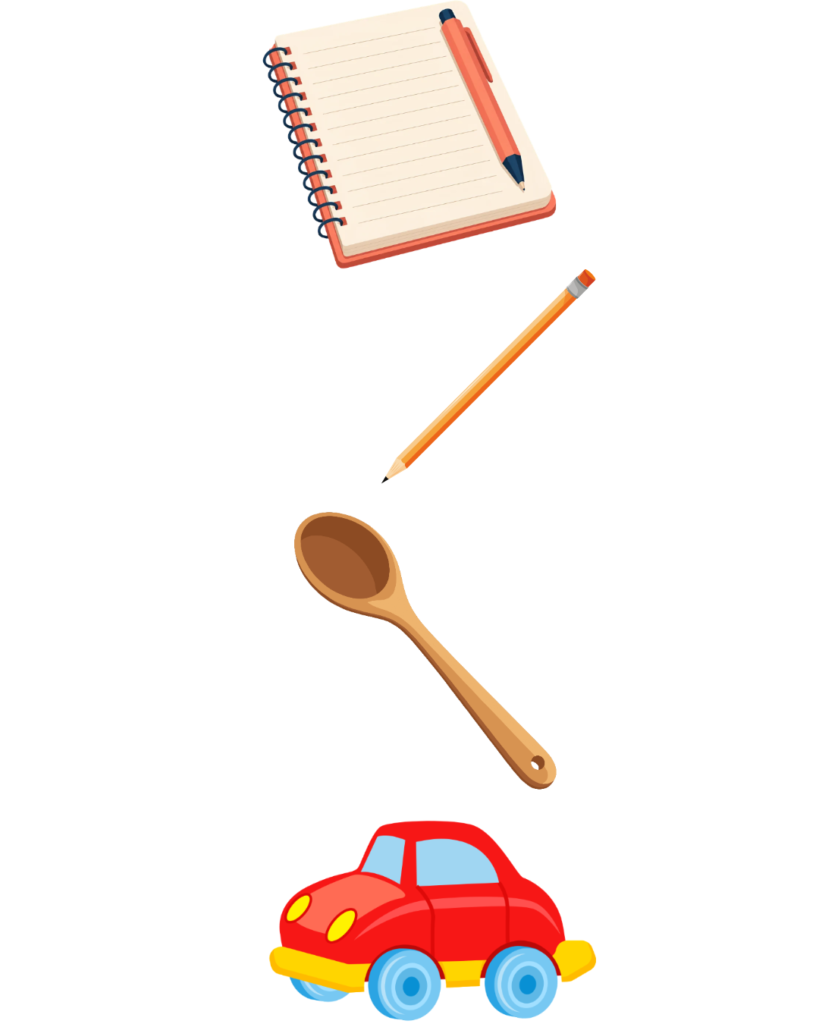
The interpretation of numbers becomes simpler if you relate them to objects familiar to you. Here are some objects that you can think of in order to understand the measurement of 16 cm.
1. A Small School Notebook
There are some school notebooks, whose height or width is similar to 16 cm. You can imagine holding such a notebook in your hand. Such visualization will help you visualize the length of 160 mm.
2. A Large Pencil
Many ordinary pencils have a length of about 15–19 cm, depending on their model. You can easily imagine a pencil of the required length.
3. A Small Kitchen Spoon
A kitchen spoon can have an overall length close to 16 cm. You can measure the length of your spoon with the help of a measuring tape. Your spoon should be close to 160 mm.
4. A Small Toy
A car toy that has a length of 16 cm. The length of such an object should be 160 mm.
Thus, 16 cm is an interesting and useful daily measurement. In real life, actual sizes can differ from the indicated.
What Is the Difference Between cm and mm?
While centimeters and millimeters are units that measure lengths, they differ in terms of the level of accuracy that they provide.
Let’s understand their differences through this simple table:
| Centimetres (cm) | Millimetres (mm) |
| Bigger unit of length | Smaller unit of length |
| 1 cm = 10 mm | 1 mm = 0.1 cm |
| Used for notebooks and pencils | Used for thin objects and small details |
| Easy for measuring medium-sized objects | Useful for precise measurements |
If the length of a pencil is 16 cm, then it can also be written as 160 mm. Both represent the same length.
How Can You Convert Other Centimetres into Millimetres?
Once you understand 16 cm to mm, converting other measurements becomes very easy.
Just multiply the centimetre value by 10.
Here is a simple conversion chart:
| Centimetres (cm) | Millimetres (mm) |
| 1 cm | 10 mm |
| 2 cm | 20 mm |
| 3 cm | 30 mm |
| 4 cm | 40 mm |
| 5 cm | 50 mm |
| 6 cm | 60 mm |
| 7 cm | 70 mm |
| 8 cm | 80 mm |
| 9 cm | 90 mm |
| 10 cm | 100 mm |
| 12 cm | 120 mm |
| 14 cm | 140 mm |
| 16 cm | 160 mm |
| 20 cm | 200 mm |
| 30 cm | 300 mm |
You can use this chart when doing your school homework or measuring different objects around your home.
Why Is Learning cm to mm Conversion Important?
You might feel that converting centimetres to millimetres is only helpful when it comes to doing mathematics homework, but the knowledge of doing so is helpful in real-life situations too.
Here are some examples:
- At school: You could measure notebooks, pencils, drawings, and other things in your classroom.
- In art and craft: You could cut paper, cardboard, and other things to the correct measurement.
- In construction: Millimetres are used in construction work.
- In shopping: You could understand the size of the small things.
- In science: You could measure small things and notice differences in their sizes.
Learning measurement conversion helps you become more confident with numbers and understand the world around you.
Conclusion
You now know that 16 cm to mm is equal to 160 millimeters. This conversion process is easy because all you have to do is to multiply the number in centimeters by 10.
Note that both centimeters and millimeters are units used to measure length, though they are two different units. The next time you hold a ruler, try measuring your pencil, notebook, or toy using both units.
You will realize that learning mathematics can be a lot of fun when dealing with real objects!
Know More: 7 mm to Inches || 76cm to Inches || How Tall Is 150 cm in Feet
Frequently Asked Questions
1. How many millimetres are there in 16 cm?
There are 160 millimetres in 16 centimetres because 1 cm equals 10 mm.
2. What is the formula for converting cm to mm?
The formula is Millimetres = Centimetres × 10. Multiply your centimetre measurement by 10 to get the answer in millimetres.
3. Is 16 cm bigger than 160 mm?
No. Both measurements are exactly equal. 16 cm and 160 mm represent the same length.
4. How many millimetres are in 1 centimetre?
There are 10 millimetres in 1 centimetre.
5. How can I convert 20 cm into mm?
Multiply 20 by 10. Therefore, 20 cm = 200 mm.
